Master of Arts in Art History and Visual Studies

Bringing together art history, aesthetics, philosophy, criticism, curation, and contemporary visual culture, MA in Art History and Visual Studies is conceived as an interdisciplinary postgraduate programme. Designed for students from diverse academic backgrounds, the programme encourages critical thinking, research, writing, and experiential engagement with art across historical and contemporary contexts.

The curriculum begins with foundational studies in visual language, the grammar of art, aesthetics, and global art histories, while introducing students to major artistic movements from pre-modern traditions to contemporary practices. Through courses on modernism, postcolonial thought, photography, performance art, installation, cinema, and immersive media, students explore how images shape culture, politics, memory, and identity.

A strong emphasis is placed on Indian and South Asian artistic traditions alongside global perspectives. Students engage with key thinkers such as Walter Benjamin, Susan Sontag, Roland Barthes, Karl Marx, Abhinavagupta, Coomaraswamy, and Homi Bhabha, while examining themes of colonialism, modernity, spectatorship, aesthetics, and contemporary visual practices.

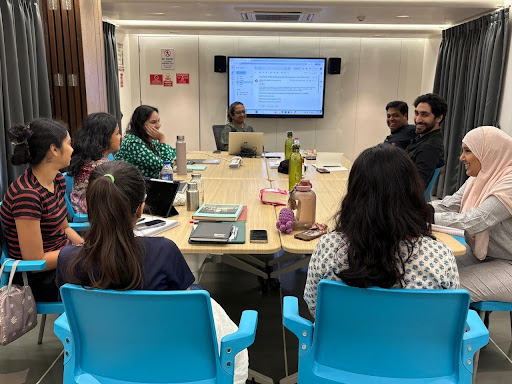
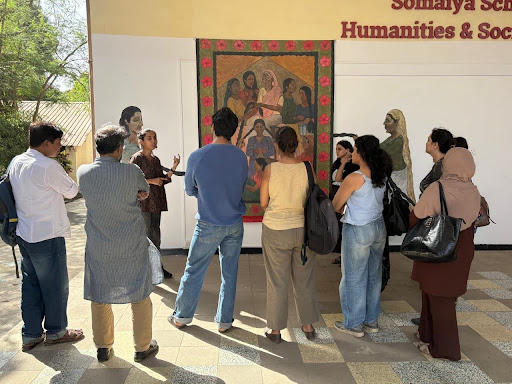
The programme combines classroom learning with extensive experiential exposure through gallery visits, artist studio interactions, museum walkthroughs, writing workshops, film screenings, field trips, and conversations with artists, curators, conservators, critics, and publishers. Educational visits include field trips to prehistoric, historic, medieval and contemporary sites.

In the final semester, students specialise in one of three pathways: Art History and Visual Studies, Writing and Art Criticism, or Curation, culminating in a dissertation: an independent research project. The programme also includes internships with leading art institutions, preparing students for careers in academia, museums, galleries, publishing, curatorial practice, cultural management, and arts research.

Key Information

Duration
2 Years
Programme Code
ST4002
Mode of study
Full time
Campus
Vidyavihar - Mumbai
Institute
Dr Shantilal K Somaiya School of Art

What is special about the Course?

From Language to Knowledge

There will be an accent on a translatorial approach to knowledge production. This will involve an engagement with material in Indian languages beyond English, and uncover a rich tapestry of indigenous knowledge in Marathi, Hindi, Gujarati and other rich resources.

Home and the World

Understand geo-social and aesthetic contexts that are African, Asian and Latin American along with European and American. Excavate local and global networks of meaning.

History as a Bouquet

Understanding our regional pasts and traditions; Exploring national contexts and international narratives.

Dynamic Dialogue between Disciplines

Where Literature Studies speaks to History and Semiotics speaks to Translation Studies. Discover new methodologies to forge connections between meaning-worlds.

Art and the Archive

How do different forms of art – popular, folk, classical, modern, contemporary – co-exist and how do we locate them and learn from their varied practices?

Travels in Trans-Continental Terrains

From the Renaissance in Europe to Modernism in Mumbai, and from Pahari miniatures to Parisian ateliers, learn deeply about art and artists, their thoughts and times.

Art and All its Acts

Biennales, Collections, Galleries, Exhibitions, Curations: the how, the why, the when and the what next.

Admission Open -2026

Eligibility Bachelor’s Degree in any field.
Multiple Entry/ Multiple Exit Structure
  • After 2 Years: Students earn the Master’s Degree
  • After 1 Year: Students can exit with a Postgraduate Diploma
  • Re-entry Option: Students who exit after one year can return in a future academic cycle to complete the second year and upgrade their diploma to a degree.

This flexibility allows students to learn at their own pace, without losing credit for the time they've already invested.

Fees: Rs. 1,75,000/- year

Scholarship of upto 75% based on need and eligibility.

Student housing is available on campus:
  • Triple-sharing room: ₹20,131 per month (Cost includes daily cleaning services)
  • Double-sharing room: ₹30,198 per month (Costs include daily cleaning services)
  • Meal Plan: ₹6,000 per month (Cost includes four 4 meals a day)
Application Deadline: 24th August, 2026
First Semester Begins: 25th August, 2026

For inquiries, contact:

 +91 70282 33777
Artwork

Career Opportunities

You could be:
  • An Art Historian and be part of art schools, academic institutions, museums, galleries and research organizations.
  • A Curator and mount shows at museums, galleries, public spaces and cultural institutions.
  • An Art Appraiser at Auction Houses and Valuing Firms
  • An Exhibition Director
  • A Cultural Policy Advisor at Government agencies and consultancy firms
  • A Gallery manager, a Museum curator
  • A Curator of Collections
pedagogy

Subjects of Specialisation

The Course will have a strong research component, will include archival and curatorial training, and encourage students to uncover visible and invisible linkages between practices of signification and the transforming world. In the final semester, students specialise in one of the following subjects:

Art History: Drawing from interdisciplinary fields such as literature, anthropology, sociology, semiotics, and cultural studies, students will be encouraged to explore intersections and develop comparative art historical frameworks that connect provincial histories with broader artistic discourses. The specialisation in Art History encourages to engage critically with the questions of inclusivity, spectatorship, and contemporary image-making while examining folk, popular, and classical art traditions.

Curation: The specialisation in Curation introduces students to the histories, politics, and evolving practices of curatorial work within museums, galleries, and contemporary art spaces. The programme explores exhibition-making, collection management, collaborative practices, and curatorial writing while critically examining the relationship between institutions, audiences, and artistic production. Through hands-on experiential learning, students develop curatorial proposals and gain practical experience in conceptualising and presenting exhibitions.

Writing and Art Criticism: Students will be encouraged to explore the histories, methodologies, and evolving practices of art criticism across both global and Indian contexts. Through engagements with major critics, magazines, manifestoes, and intellectual traditions, the programme traces the development of critical writing from classical aesthetics to contemporary debates in art and visual culture. It also foregrounds art criticism in non-English Indian languages, fostering diverse perspectives and expanding modes of critical and creative engagement with art

Faculty

Prof. Abhay Sardesai
Director, Dr. Shantilal K Somaiya School of Art
Visiting Faculty
Abhay Maskara Alka Pande Amrit Gangar
Amrita Gupta Singh Aparna Andhare Dr. Monalisa Behera
Gayatri Sinha Girish Shahane Jerry Pinto
Kamayani Sharma Kuntal Bhogilal Madhavi Gore
Mortimer Chatterjee Nancy Adajania Prabodh Parikh
Ramu Ramanathan Ranjit Hoskote Shaleen Wadhwana
Shilpa Phadke Siddharth Somaiya Snehal Morey
Sonali Bhagchandani Tasneem Zakaria Mehta Zeenat Nagree
Zehra Jumabhoy    
Apply Now Enquire Now Chat with a Student